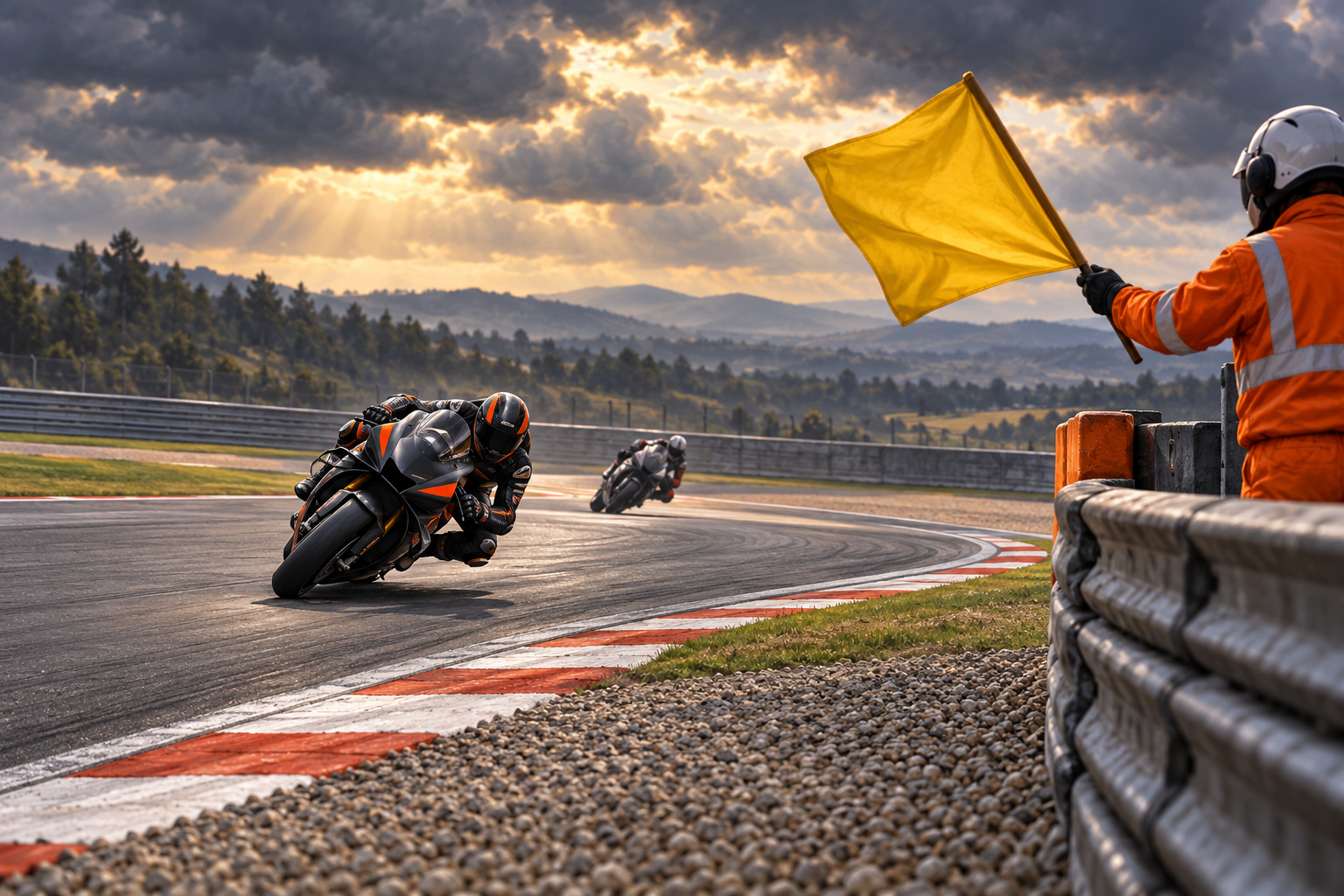
A MotoGP race can change while the running order stays exactly the same. A warning at the next corner can restrict overtaking. Rain can open the possibility of a bike swap. A red flag can interrupt the contest altogether. Following those signals makes the racing easier to understand, especially when the television pictures jump between several incidents.
For a new viewer, three questions are useful: what has changed on the circuit, what must the rider do, and how could that response affect the race? This guide follows that sequence.
Start with the flags beside the track
Marshals communicate information and instructions through a shared flag system. Some signals describe conditions; others require a particular response. MotoGP’s official flag-system guide explains the distinctions. These are useful signals to recognise:
- Yellow: danger ahead. Riders slow down and proceed cautiously; during a race they cannot overtake until the green flag.
- Green: the track is clear. After a yellow-flag incident, it identifies where the restriction ends.
- Red: the session or race is interrupted. Riders return carefully to the pits.
- Blue: a rider must allow a faster rider through in practice, or allow a rider lapping them through during the race.
- Black with an orange disc: a numbered rider has a potentially dangerous mechanical problem and must leave the track immediately.
- Chequered: the finish of the race or session.
Readers exploring MotoGP flags meaning can also follow Wrong Apex’s motorsport coverage alongside these official explanations.
Rain warnings and bike-change permission are different signals
A white flag carrying a diagonal red cross reports rain on that section of the circuit. A plain white flag has a different role in a MotoGP race: it tells riders that changing motorcycles is permitted.
That permission is central to flag-to-flag racing. When a race is declared wet before the start, or the relevant permission is given during a race, riders can switch to their second motorcycle. The race can continue while teams and riders respond to changing conditions.
MotoGP’s explanation of how riders switch bikes during a race makes an important point: permission does not compel everyone to stop on the same lap. The timing remains a decision for the rider and team.
A bike swap changes the strategic picture
In an ordinary dry MotoGP race, a scheduled stop is generally unnecessary. A weather-driven stop therefore changes the rhythm of the contest. Riders enter pit lane, reach their team’s working area and transfer to the prepared motorcycle before rejoining.
The official MotoGP pit-stop explainer describes why the process matters for both safety and performance. Slick tyres suit dry conditions, while a wet setup becomes valuable as the circuit gets wetter. Mixed conditions make the choice harder.
As a viewer, watch the next few laps after a swap. A temporary change of position in the pits tells only part of the story. Comparing how the two groups perform as conditions develop gives a better picture of the decision.
Read the instruction before judging the result
Race control and the stewards have different responsibilities within the wider sporting framework. The FIM oversees enforcement of the championship’s regulations, and riders and teams must follow the applicable conduct rules. MotoGP’s official rules overview provides a useful introduction to that framework.
A television replay may show a pass without showing every signal the riders encountered. Before deciding whether an incident was legal, look for the flag location, the relevant race-control message and any subsequent official decision. The same approach helps distinguish a genuine racing overtake from a rider making room to be lapped.
A simple way to follow your next race
Pick one rider and follow their decisions through a changing situation. Notice the signal, check whether they slow down or enter the pits, then see what happens to their pace and position. That small exercise connects the rules to the racing without requiring you to memorise the entire rulebook.
Flags become much easier to remember when each colour is attached to an action you have just watched.